
The freeze response during intimacy after betrayal can involve involuntary protective responses associated with the autonomic nervous system, and is not a sign of incomplete forgiveness. After betrayal, the body may begin treating a partner's presence as something to brace against. Even after emotional healing and conscious forgiveness, that bracing can continue during physical closeness — going rigid or numb, dissociating, staying hypervigilant, or flinching without deciding to. Polyvagal theory, developed by Dr. Stephen Porges and set out in Porges (2011), The Polyvagal Theory: Neurophysiological Foundations of Emotions, Attachment, Communication, and Self-Regulation (W. W. Norton), offers one framework for making sense of these responses. On that model, the protective response operates below conscious thought and is not readily overridden by willpower or spiritual practice alone. Somatic, polyvagal-informed educational practices — grounding, co-regulation with a partner, and gradual re-engagement at the body's own pace — are one approach some people find useful. These educational practices work alongside, not as substitutes for, licensed clinical care from a therapist trained in betrayal trauma.
Free Guide
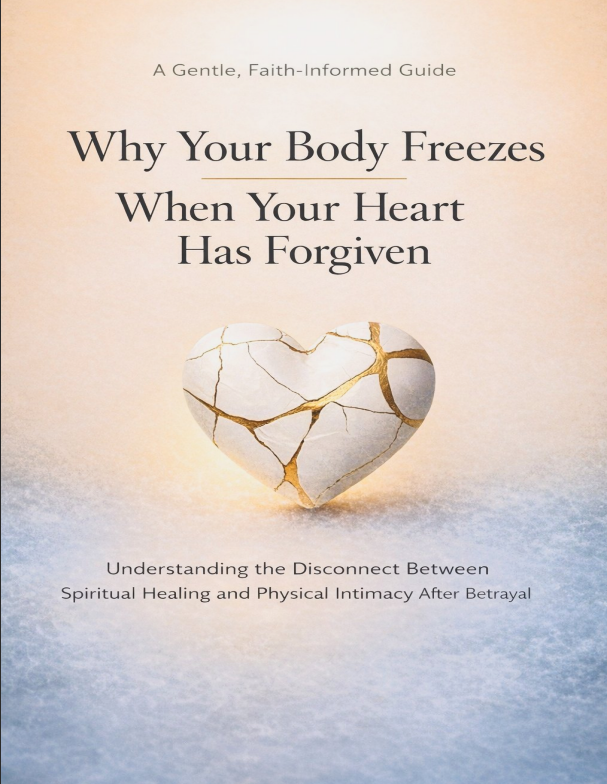
Why Your Body Freezes When Your Heart Has Forgiven
You've prayed. You've forgiven. But your body still braces when he reaches for you — and no one has told you why.
Free Guide
Rebuilding Sacred Intimacy
Why Your Body Freezes When Your Heart Has Forgiven
What you're experiencing has a name. Polyvagal theory — developed by Dr. Stephen Porges — offers one framework for understanding how the autonomic nervous system sorts safety from threat before conscious thought can catch up. Read through that lens, betrayal can leave the body bracing against a partner's presence long after the mind has settled the question. Which is why forgiveness, on its own, doesn't always reach it.
This isn't a faith problem. It's a wiring problem.
Every week it stays unaddressed is another week of bracing, performing, or avoiding. Another week of blaming yourself for not being healed enough. This guide walks you through the mechanism, why it's persistent, and the first three practices to try tonight.
Framework reference: Porges, S. W. (2011). The Polyvagal Theory: Neurophysiological Foundations of Emotions, Attachment, Communication, and Self-Regulation. W. W. Norton.
From Kathy
I lived this. The freeze response, the bracing, the praying for it to stop — and the shame that came with all of it. What finally moved me wasn't more prayer or more counseling. It was understanding what my nervous system was doing, in language that finally fit. This guide is what I wish someone had handed me five years ago.
— Kathy Sullivan, co-founder, Rebuilding Sacred IntimacyWhat's Inside the Guide
- Why touch can feel unsafe after betrayal — even when you want closeness
- The forgiveness gap — why forgiveness and felt safety don't always arrive together
- Three gentle practices you can try tonight (no partner required for the first one)
Opens instantly. No spam. Your privacy matters.