Attachment Styles and Betrayal: Why Some Wounds Cut Deeper

Couple standing apart with invisible threads representing attachment bonds strained by betrayal trauma in marriage

Two people can experience nearly identical betrayals and respond in completely different ways. One partner spirals into relentless checking and reassurance-seeking. Another shuts down entirely, insisting they’re fine when they clearly aren’t. A third oscillates between desperate clinging and furious withdrawal, sometimes within the same hour. The connection between attachment styles and betrayal explains why. … Read more

Betrayal Blindness: When Your Mind Protects You from Truth

Woman looking through fragmented glass representing betrayal blindness, the unconscious mechanism that prevents seeing signs of betrayal in marriage

If you’ve asked yourself that question while staring at evidence that now seems impossible to have missed, here’s what was actually happening: your mind was protecting you from a truth it determined you couldn’t yet handle. Betrayal blindness is an unconscious psychological mechanism that prevents you from perceiving betrayal when recognizing it would threaten a … Read more

Hurt vs. Trauma After Infidelity: The Difference That Changes How You Heal

Split visual showing calm grief on one side and nervous system activation on the other representing hurt vs trauma after infidelity

Not all pain after infidelity constitutes trauma—and understanding the distinction between hurt vs. trauma after infidelity changes how you heal. Hurt is a normal response to betrayal that, while painful, processes through standard grieving. Trauma involves neurobiological changes that disrupt normal processing and require specialized approaches. Both are valid experiences deserving compassion. But they respond … Read more

Why Your Nervous System Response To Betrayal Is Actually Protective

nervous system response to betrayal polyvagal theory betrayal trauma

Your nervous system response to betrayal is not a choice, a character flaw, or evidence of weak faith—it’s neurobiology. Polyvagal theory, developed by Dr. Stephen Porges, explains why your body reacts to infidelity discovery with symptoms that can feel like losing control: racing heart, difficulty breathing, emotional flooding, or complete shutdown. Understanding this neurological framework … Read more

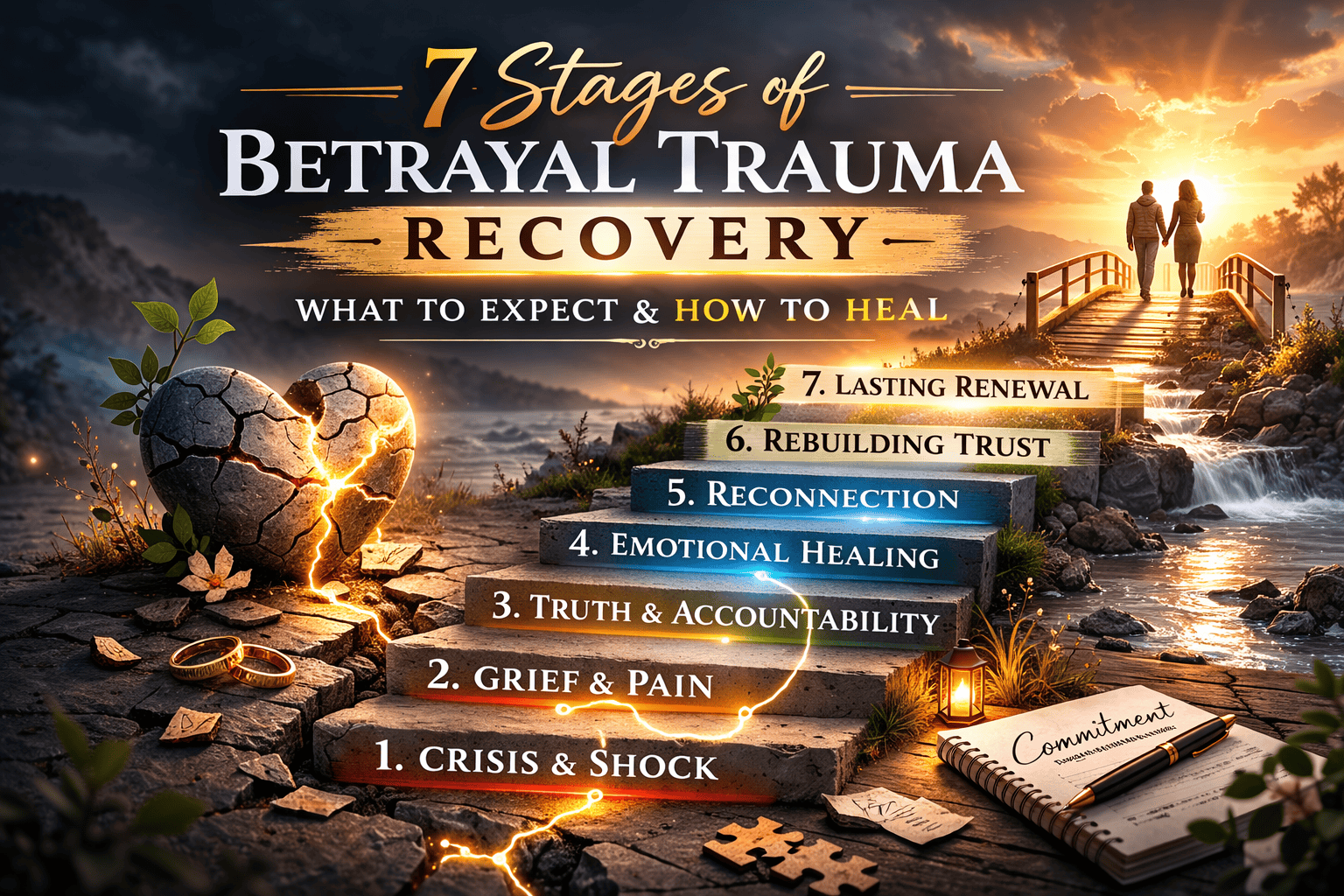
The 7 Stages of Betrayal Trauma Recovery: What to Expect and What Helps

Winding path through landscape representing the seven stages of betrayal trauma recovery from crisis to integration

The stages of betrayal trauma recovery follow a recognizable pattern—though the journey through them is rarely linear. Understanding these stages provides a framework for the chaos. It helps set realistic expectations, and it offers something essential in the early months: assurance that what you are experiencing is part of a recognizable healing process, not evidence … Read more

Betrayal Trauma vs. PTSD: Understanding the Difference

Betrayal trauma vs PTSD understanding the difference

Betrayal trauma vs PTSD is a distinction that matters for your healing. Both share significant symptom overlap, but understanding their differences can validate your experience and guide you toward appropriate support. Both involve intrusive memories, hypervigilance, avoidance behaviors, and emotional dysregulation. However, betrayal trauma specifically involves violation by an attachment figure, creating unique complications that … Read more

What Is Betrayal Trauma? A Clinical and Faith-Based Guide

What is betrayal trauma clinical and faith-based guide

What is betrayal trauma? It’s a type of psychological harm that happens when someone we trust for safety and support breaks that trust in a serious way. Betrayal trauma is different from regular relationship disappointment. It happens when the person we trusted for safety becomes the one who hurts us. This causes a neurobiological crisis … Read more