
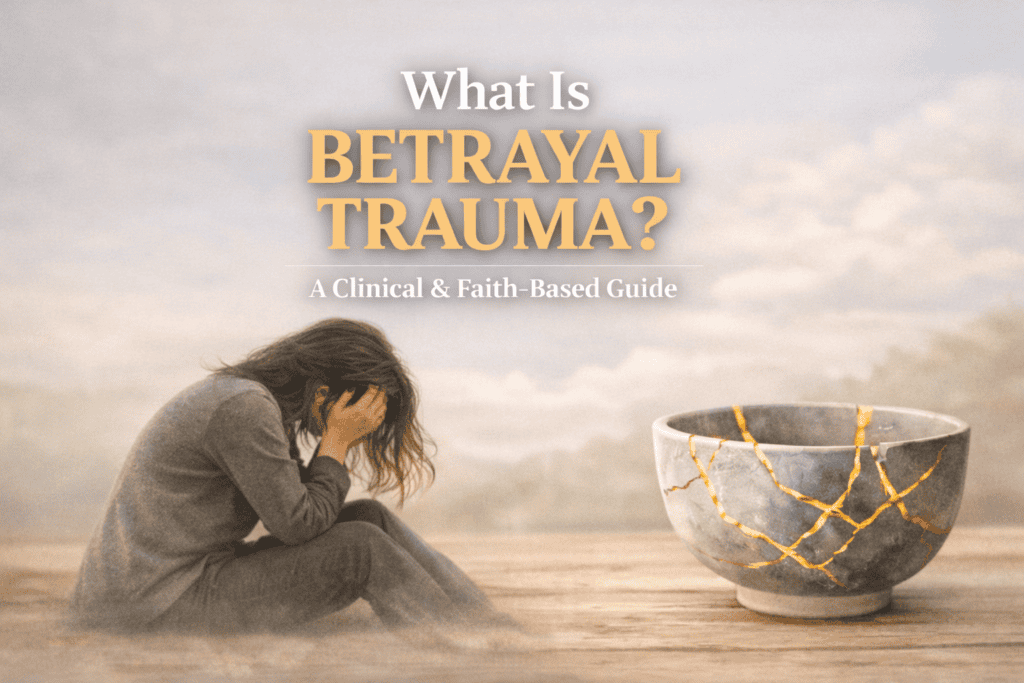
What is betrayal trauma? It’s a type of psychological harm that happens when someone we trust for safety and support breaks that trust in a serious way. Betrayal trauma is different from regular relationship disappointment. It happens when the person we trusted for safety becomes the one who hurts us. This causes a neurobiological crisis that impacts memory, emotions, health, and spiritual well-being. These responses are survival mechanisms, not flaws in character or faith. Understanding this distinction transforms how couples approach healing after infidelity.
If you feel hypervigilant, have intrusive thoughts, or experience emotional flooding after finding out about a partner’s infidelity, you are not broken. Your nervous system is responding exactly as designed. This guide offers a clinical and faith-based approach. It helps explain what’s happening and what true healing needs.
What Is Betrayal Trauma? The Clinical Definition
Dr. Jennifer Freyd, who coined the term at the University of Oregon, discovered a key issue. When someone we rely on for support harms us, our natural protective instincts often don’t work. We cannot choose only to flee or fight against someone; we also need to consider other options.
This leads to what Freyd calls betrayal blindness. It’s a survival skill. We might block out the betrayal without realizing it. This helps us keep our attachment to the relationship. Our article dives into betrayal blindness and how the mind shields you from the truth.
In marital infidelity, betrayal trauma happens. This is because marriage is our closest emotional bond. Your spouse isn’t just a roommate who disappointed you. They are the person you chose as your main attachment figure. This is the one you trusted with your body, your secrets, and your future. When someone breaks the covenant, the brain sees this as a serious threat to survival.
Betrayal Trauma Symptoms: What You May Be Experiencing
Betrayal trauma symptoms fit into different categories. Knowing this can help you feel less alone during a confusing time. These responses aren’t weak; they show your nervous system is doing its job. It protects you from threats.
Cognitive Symptoms
Intrusive thoughts about the betrayal that arrive without warning. Difficulty concentrating on normal tasks. Obsessive need to know details, followed by regret for asking. Mental movies playing scenes you can’t stop. Racing thoughts, especially at night. Confusion about what’s real, questioning your own perceptions and memories.
Emotional Symptoms
Intense grief that comes in waves. Rage that surprises you with its intensity. Shame that whispers you should have known, should have been enough. Fear that it will happen again. Numbness alternating with an overwhelming feeling. Someone will discover something else that causes anxiety.
Physical Symptoms
The body keeps score of betrayal.
Common physical signs include:
- Sleep problems (like insomnia or oversleeping)
- Changes in appetite
- Nausea or stomach issues
- Chest tightness or trouble breathing
- Tiredness even after enough rest
- Increased startle response
Our guide explains why your body remembers betrayal and the neuroscience behind it.
Relational Symptoms
Hypervigilance about your partner’s behavior, location, and communications. Difficulty trusting your own judgment. Withdrawal from friends and family. Oscillating between desperate attachment and complete detachment. Sexual responses range from aversion to compulsive reconnection.
How Betrayal Trauma Differs from Other Wounds
Not every hurt makes up trauma. The distinction matters because treatment approaches differ in important ways. Our article explains the difference between hurt and trauma after infidelity. Here are the key factors:
Attachment violation: Betrayal trauma happens when a primary attachment bond is broken. This bond is crucial for our sense of safety.
Ongoing threat: A car accident or natural disaster ends, but trauma can linger. It may still affect your life as you heal. You must find safety while managing this ongoing relationship.
Identity disruption: Betrayal changes your relationship and how you view yourself. It changes your history and affects how you perceive reality.
Many people wonder about the relationship between betrayal trauma and PTSD. While they share symptoms, there are important distinctions in how they’re treated. See our detailed comparison in betrayal trauma vs. PTSD: understanding the difference.
The Nervous System Response to Betrayal
Understanding your nervous system’s role in betrayal trauma transforms self-judgment into self-compassion. Dr. Stephen Porges’ polyvagal theory helps explain your body’s reactions. Here’s the main idea from our look at how the nervous system reacts to betrayal: a polyvagal view.
Your autonomic nervous system has three main states:
- Ventral vagal: safe and social
- Sympathetic: fight or flight
- Dorsal vagal: freeze and collapse
Healthy relationships help us stay in a ventral vagal state. This makes us feel safe and able to connect. Betrayal hijacks this system.
After betrayal, your nervous system can change quickly. You might feel hypervigilant, which is a symptom of sympathetic activation. You could also experience emotional numbness, known as dorsal shutdown. Sometimes, you may have brief moments of connection, called ventral. This isn’t instability. It’s your system trying to find safety in an unpredictable environment.
Why Some Wounds Cut Deeper: The Role of Attachment
Not everyone responds to betrayal in the same way. Attachment Styles and Betrayal: Why Some Wounds Cut Deeper looks at how your attachment history affects your response to trauma.
People with anxious attachment often show strong pursuit behaviors. They might feel a desperate need for reassurance. They also struggle with uncertainty and can experience intense emotions. People with avoidant attachment might seem calm on the outside. But inside, they often feel a lot of emotional pain. Those with disorganized attachment may swing between both extremes, finding no stable ground.
Knowing your attachment style isn’t about blame. It’s about adjusting your healing to fit your needs.
A Faith Perspective on Betrayal Trauma
For those grounded in Christian faith, betrayal trauma carries additional dimensions. Marriage is more than just a social contract. It’s a covenant that shows Christ’s bond with the church. When that covenant is violated, the wound touches something sacred.
The church has, at times, worsened trauma wounds. They may seek forgiveness too fast, downplay the hurt, or blame their partner. They may also treat trauma symptoms as a sign of spiritual failure.
A trauma-informed faith view recognizes that your symptoms don’t show weak faith. David’s psalms of lament show that God’s people have always shared their deepest pain with Him. Lament is not the absence of faith—it may be its purest expression.
Kintsugi is a Japanese art that fixes broken pottery with gold. This process serves as a strong symbol for faith-based healing. The goal isn’t to restore your marriage to what it was before, as if the break never happened. The goal is transformation, where the fractures themselves become part of something beautiful. This is resurrection theology in relationships: it’s not about bringing the old back to life. Instead, it’s about creating something new.
The Path Toward Healing
Betrayal trauma healing is neither linear nor quick, but it is possible. The 7 stages of betrayal trauma recovery outline the path to healing. Key principles include:
Safety first: We must establish emotional safety before deep processing can occur. This doesn’t always mean breaking up. It means the unfaithful partner must show honesty and real change.
Healing is about balancing two truths together: grief and hope, anger and love, consequences and grace. Pressure to choose one over the other stalls recovery.
Professional support: Betrayal trauma typically requires specialized therapeutic support. A therapist trained in betrayal trauma, such as those certified by APSATS or CSAT, provides support that friends, family, and caring pastors often can’t offer.
Time: The timeline for healing is typically measured in years, not months. This isn’t about being negative. It’s a realistic view that helps avoid the frustration of random deadlines.
Frequently Asked Questions About Betrayal Trauma
Is betrayal trauma a real diagnosis?
Betrayal trauma isn’t a formal DSM diagnosis, but it is a well-known topic in clinical research. Many clinicians treat it using trauma-focused approaches adapted specifically for attachment violations. The symptoms are real, the suffering is real, and effective treatment exists.
How long does betrayal trauma last?
Acute symptoms usually last 6 to 18 months with proper support. But healing often isn’t a straight path. It typically takes 2-5 years for the experience to fully integrate. This way, it becomes part of your story without taking over your daily life. This doesn’t mean constant suffering for years; it means ongoing growth and processing.
Can you get PTSD from infidelity?
Yes. Research shows that infidelity can lead to PTSD symptoms that meet clinical criteria. Key factors are the seriousness of the violation, the length of the deception, and the person’s background and support system. See our detailed comparison in “Betrayal Trauma vs. PTSD.”
Is my response to betrayal normal?
If you have intrusive thoughts, feel hypervigilant, or experience emotional flooding after finding out about infidelity, your reaction is normal. You might also feel physical symptoms or struggle with daily life. These aren’t signs of weakness or failure. They’re signs that your nervous system is reacting to real threats.
Does betrayal trauma require professional help?
Some people heal with informal support, but betrayal trauma often needs specialized help. A therapist skilled in betrayal trauma offers tools, insights, and support. This helps speed up healing and avoid common mistakes. At a minimum, consider consulting with a specialist to assess your specific situation.
Additional Resource:
- https://www.psychologytoday.com/us/basics/trauma — general clinical resource on trauma
- https://bfreedforlife.com — Dr. Barbara Steffens
